
Shaler Township City Directory Sources
No dedicated Shaler Township city-directory run with verified publisher and year coverage was located in the official research. That matters. Shaler is a first-class township, not the central publication territory of the historic Pittsburgh volumes, so a nearby result cannot be relabeled as Shaler evidence. The practical shelf is layered instead: local school-era material at Shaler North Hills Library, regional printed directories at Historic Pittsburgh, and county or state records that can test an address and date.
| Collection | Verified coverage | Publisher or creator | Where held | Access |
|---|---|---|---|---|
| Shaler Area School District yearbooks | 1934-2018, except 1943 and 1954 | School collection; no publisher claim used here | Shaler North Hills Library | Digitized files and print copies |
| Historic Pittsburgh directory corpus | 1815-1945 core digitized run | J. F. Diffenbacher and R. L. Polk & Company | University of Pittsburgh Library System and partners | Public browse, title/date filtering, and term search |
| Cataloged R. L. Polk directory page | 1940 example page | R. L. Polk & Company | Historic Pittsburgh | Catalog record; page access had verification friction during research |
| In-library Ancestry | Collection-specific dates vary | Licensed research resource | Shaler North Hills Library | Library use only |
The regional collection reports 129 items. Its broader date filter shows material from 1814 through 1963, but the collection description supports 1815 through 1945 as the core published-directory claim. Record the volume title and place before treating any result as a lead for Shaler.
Shaler Township Yearbook Records
The most direct local people collection is the Shaler Area School District yearbook series. Shaler North Hills Library has digitized most volumes from 1934 through 2018 and keeps physical copies for inspection and copying. The two known gaps are 1943 and 1954. Most digital volumes are page images, which makes captions, activity pages, and photographs useful even when a browser text search is imperfect. The 1968, 1970, and 2016 through 2018 volumes are large files, while 1983 is available in both formats.
The library’s digitized Shaler yearbook collection is the source shown below.
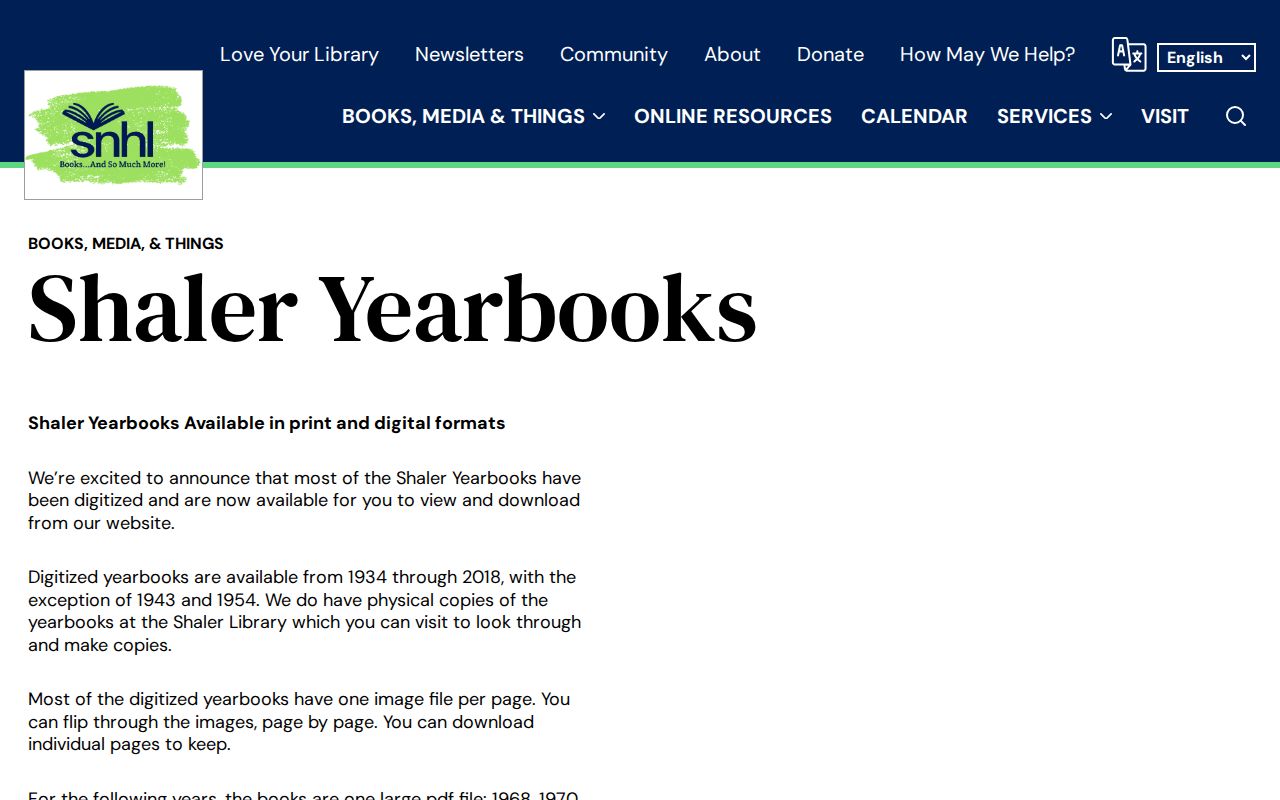
A yearbook can connect a person to a class year, photograph, club, or school community. It does not establish a street address, a full household, or a present-day connection. Preserve the volume, page, caption, and access date, then compare that clue against a census, deed, obituary, or another custodian-held record.
Note: Library access rules, file formats, and available scans can change, so check the current collection page before relying on a missing or unreadable volume.
Shaler City Directory Timeline
The local and regional shelves overlap, but they do not form one uninterrupted township directory. The timeline below separates verified collection milestones from a claim of full Shaler coverage. It also shows why a school-era clue and a regional printed-directory lead need different corroboration.
- 1815-1945: Historic Pittsburgh identifies this as the core published run of its digitized directory corpus.
- 1934: The verified Shaler Area School District yearbook run begins.
- 1943 and 1954: The library identifies these two yearbook gaps.
- 1942: Shaler North Hills Library opened after a 1941 groundbreaking, later preserving historical school volumes.
- 2018: The verified digitized and print yearbook run ends at this point; do not infer later coverage.
Regional City Directories Near Shaler
Historic Pittsburgh, hosted by the University of Pittsburgh Library System, is the regional city-directory corpus to test after the local source. Its collection description identifies J. F. Diffenbacher and R. L. Polk & Company as publishers within the 1815-1945 digitized material. Most items cover Pittsburgh and Allegheny City, and some cover Homestead and nearby boroughs. That is useful regional evidence, but it is not a verified Shaler series or a reverse directory for every township address.
The Historic Pittsburgh directory collection supplies title and date filters plus term searching.
Research access encountered a human-verification challenge on the live page. That is access friction, not evidence that the collection is absent. A normal browser session may be needed to view an item page, and the catalog title should be saved with any name-and-address lead.
Checking Shaler City Directory Geography
Read the title page and stated place coverage before following a result. Pittsburgh or Allegheny City results should not be silently converted into Shaler Township entries. Match the street, locality wording, date, and any nearby borough against the address trail. Where a result is only a surname match, treat it as a lead rather than a family conclusion.
Shaler has several postal and historic labels. Glenshaw, Allison Park, Pittsburgh, Etna, and Sharpsburg can appear as mailing places for addresses that touch the township, while a Glenshaw result can also fall outside Shaler. The county municipality field and a parcel identifier are stronger geographic checks than a postal city alone. This is why a city directory search for Shaler often needs a second source.
- Save the directory title, year, printed place, and page.
- Compare the street or locality with the county parcel record.
- Keep mailing place separate from municipal jurisdiction.
- Use a deed, census, or probate record to test the lead.
Reading a Shaler City Directory Lead
The inspected Historic Pittsburgh material verifies the collection at a careful level only. It identifies personal or business names and addresses, and a cataloged 1940 R. L. Polk page confirms a year-specific item. The live entry image was not safely readable during unattended inspection. For that reason, no claim is made here about a printed occupation, spouse notation, owner mark, household relationship, or abbreviation convention in a particular volume.
| Personal or business name | A name appearing in the verified collection-level description. |
|---|---|
| Address | An address appearing with a collection entry where the item’s geography supports the lead. |
- Criss-cross directory
- A directory arranged by address rather than name. No dedicated Shaler criss-cross run was verified in the research.
- Householder index
- An index arranged around a household or address reference. Its presence must be confirmed in the specific volume.
- Abbreviation key
- A publisher’s explanation of shortened terms. Do not assume a key exists or where it appears until the volume is open.
Shaler Township Community Search Terms
Historic geography is part of the search. Shaler was formed in 1847 from territory that included areas later associated with Etna, Millvale, and parts of Ross Township. Etna and Millvale incorporated separately in 1868, and Shaler became a first-class township in 1900. Earlier material may therefore sit under a different local name even when the family or land later falls inside modern Shaler.
Use the township history’s community names as search terms: Cherry City, Bauerstown, Cabbage Hill, Sharps Hill, Undercliff, Elfinwild, and Glenshaw. Big Pine Creek Valley and Girty’s Run Valley can also help interpret an older geographic description. Search each term beside a surname or land reference, then compare dates and locations before deciding it describes the same place.
The township’s History of Shaler provides the source context for this geographic check.
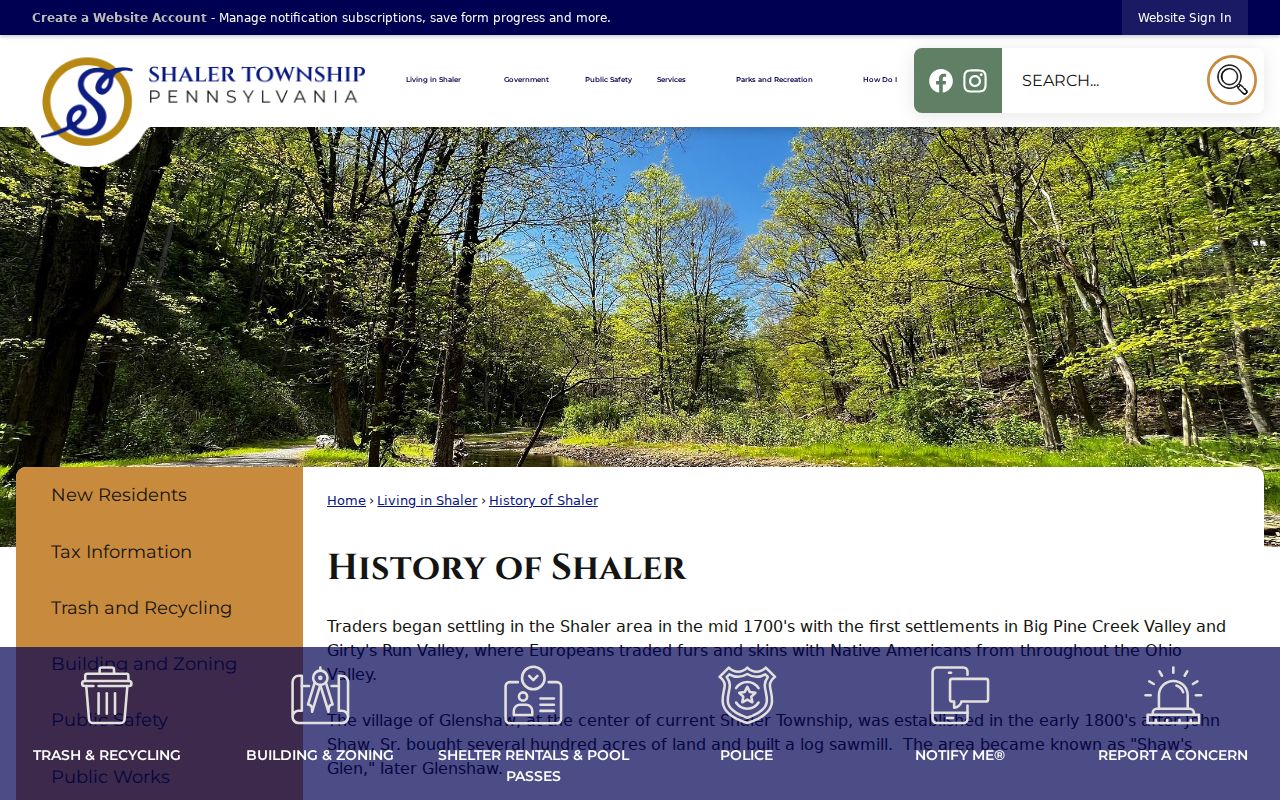
These older names are useful search keys, not automatic replacements for Shaler Township on a citation.
Shaler City Directory Research Rooms
When the digital shelf ends, Allegheny County’s genealogy guidance points researchers to Carnegie Library’s main research room, Pennsylvania Division, and microfilm room; the University of Pittsburgh’s Hillman and Darlington Libraries; Pitt Archives Service Center; Historic Pittsburgh; the Western Pennsylvania Genealogical Society; the Historical Society of Western Pennsylvania; and a Family History Center. Check a catalog or ask staff about a particular volume before traveling. The county does not identify exact Shaler city-directory holdings for each institution.
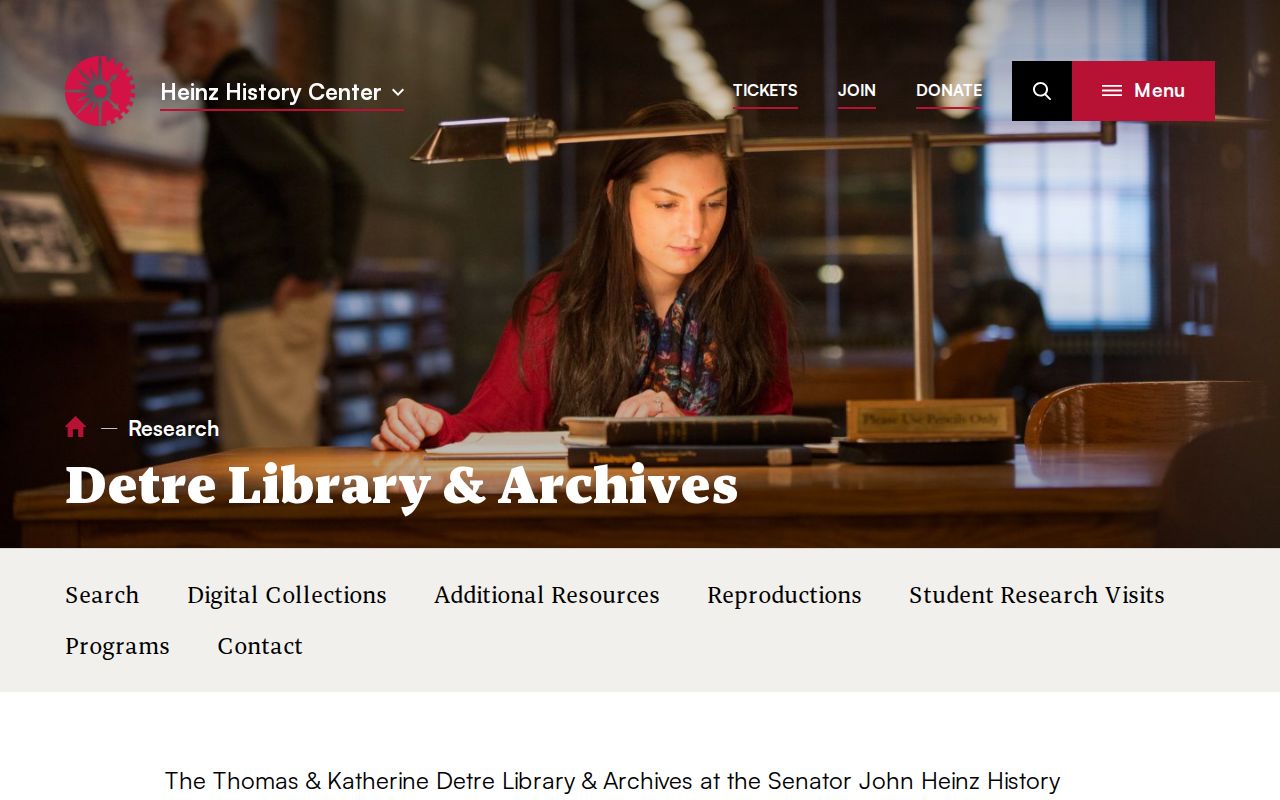
The Detre Library & Archives at the Heinz History Center is a concrete regional stop. Its official information lists books, maps, periodicals, archival collections, and large photograph holdings. Research access is free, appointments are recommended, and a researcher should use the reference contact route before a visit to ask about a surname, map, directory, or organization collection.
The Detre Library & Archives describes the collection and visit process.
Shaler North Hills Library also provides in-library Ancestry. Its collection dates vary by database, so a search result should retain the database title and its source citation.
Tracing Shaler City Directory Households
For family history, work from the best dated clue rather than forcing an unverified directory result into a household line. The National Archives releases federal population schedules after 72 years. A census can provide a household snapshot, but the enumeration district and page should be recorded with the address context. A directory or yearbook can then be compared to the nearest available census, parcel, deed, or estate record.
- Start with the known surname, address, class year, census name, or obituary clue and record spelling variants.
- Check the county Real Estate Portal by address to capture the parcel identifier and separate situs from owner or tax mailing information.
- Test a Historic Pittsburgh volume only after its named geography could include the target place.
- Pair the closest available census with the directory or school-era clue, preserving the enumeration district and page.
- Continue through deeds, wills, probate, certificates, newspapers, or local research rooms when the evidence supports the next step.
A disappearance from a regional city directory does not by itself show a move, death, or absence from Shaler. The volume may not cover the township, the name may be indexed differently, or the entry may be outside the inspected years. Cite the gap plainly and use the next custodian-held record.
Note: A yearbook can support a school-era connection, but an address-keyed county source is needed before calling it a household link.
Shaler Township Family-History Use
For a family reconnecting a relative, a former classmate, or an estate question, the strongest result is a small, dated set of independent records. A yearbook page may establish a local school association. A census may show a historical household. A recorded deed shows a party’s role in a property transaction, while a probate file may identify an estate representative where the file is public. Each source answers a different question.
No official Shaler-wide obituary index or municipal cemetery lookup with verified coverage was found. For an exact surname and date, use the library, county genealogy institutions, regional historical societies, parish or denominational archives, and newspaper research paths rather than claiming that a universal local index exists.